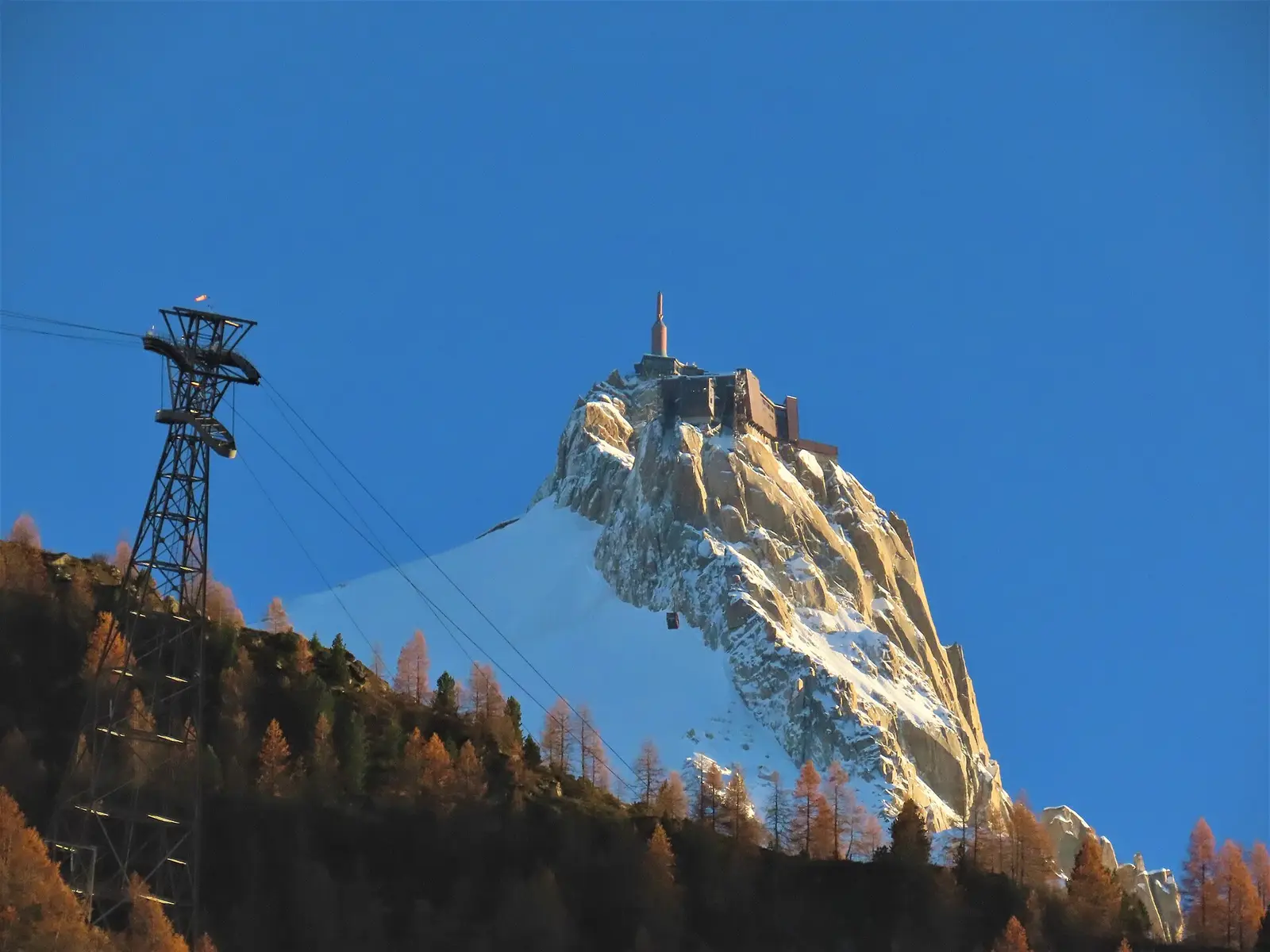
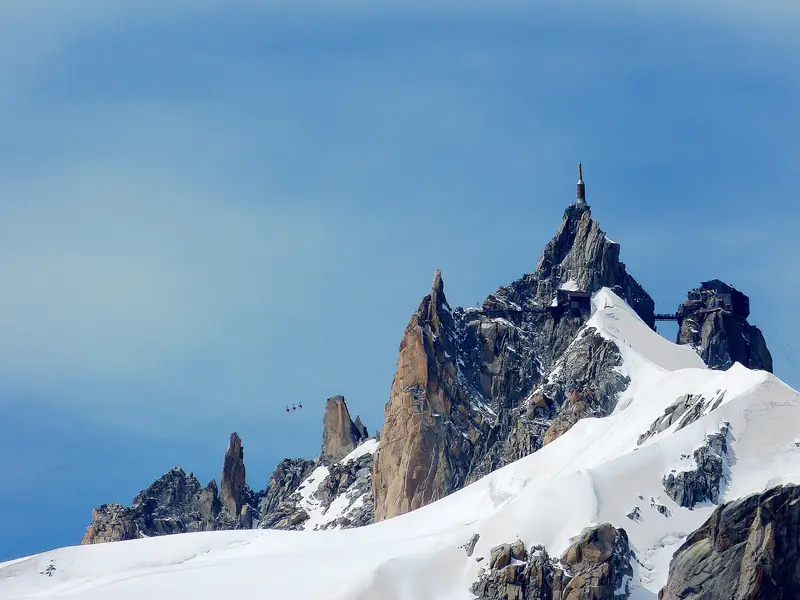
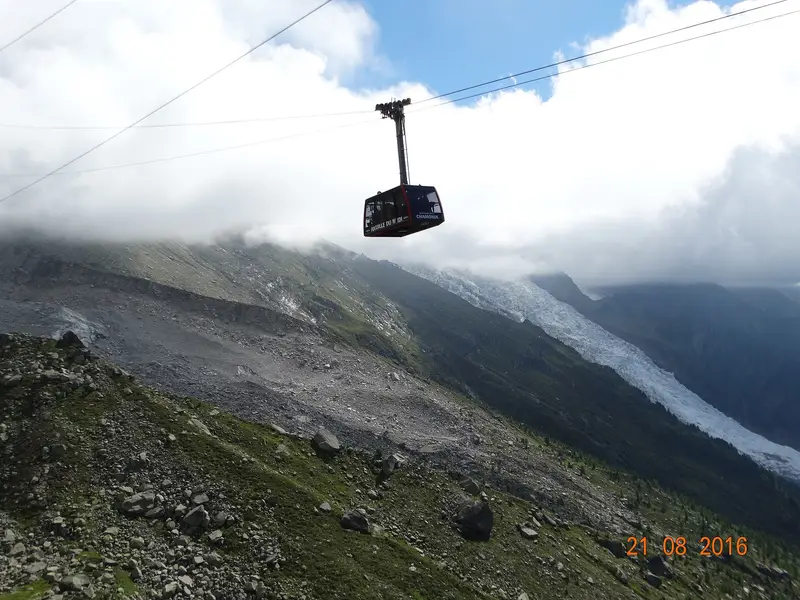
Two cable cars climb from Chamonix at 1,035 m, with a change at Plan de l'Aiguille, to the summit terrace.
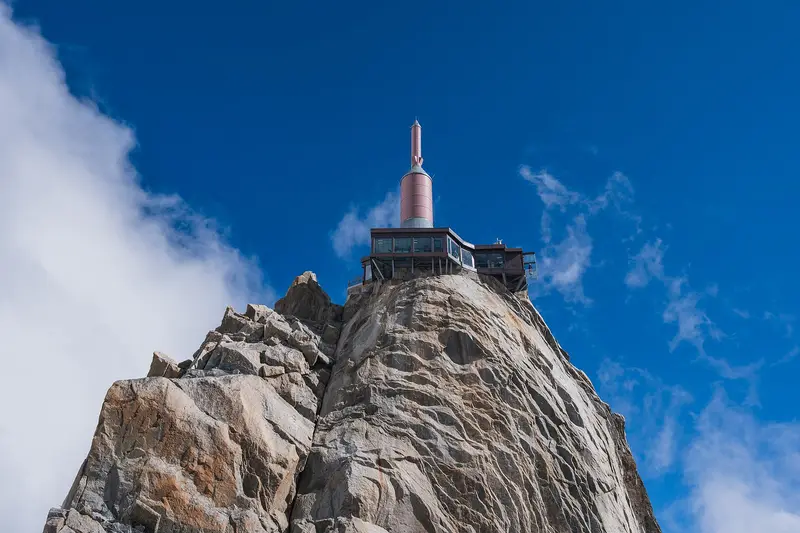
The Aiguille du Midi cable car climbs from Chamonix to a terrace at 3,842 m. On 21 November 2026 it was closed, with reopening announced for 19 December 2026. A summit return costs €60.20 to €83.00 for an adult and needs a free reservation. Figures checked 21 November 2026.
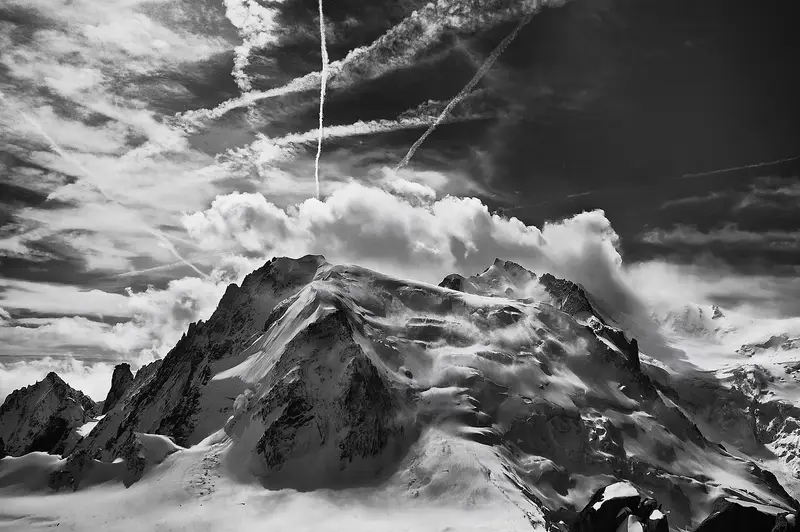
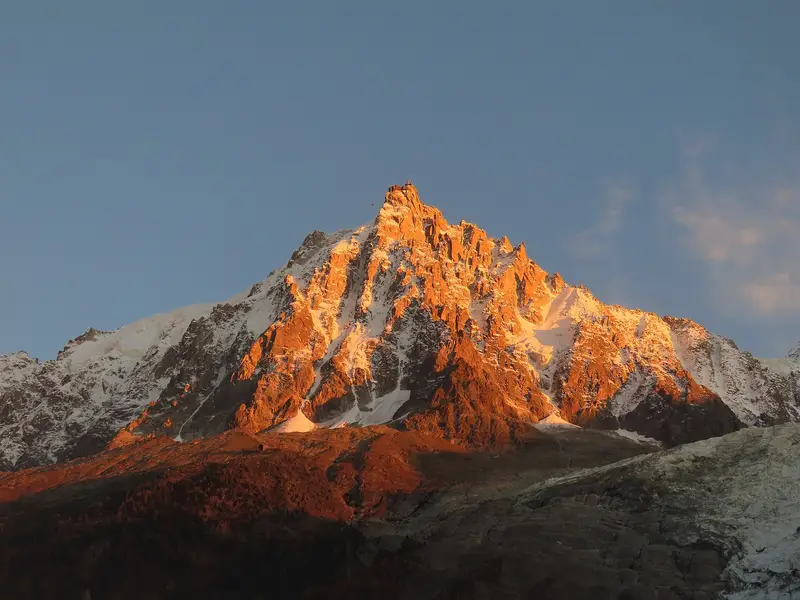
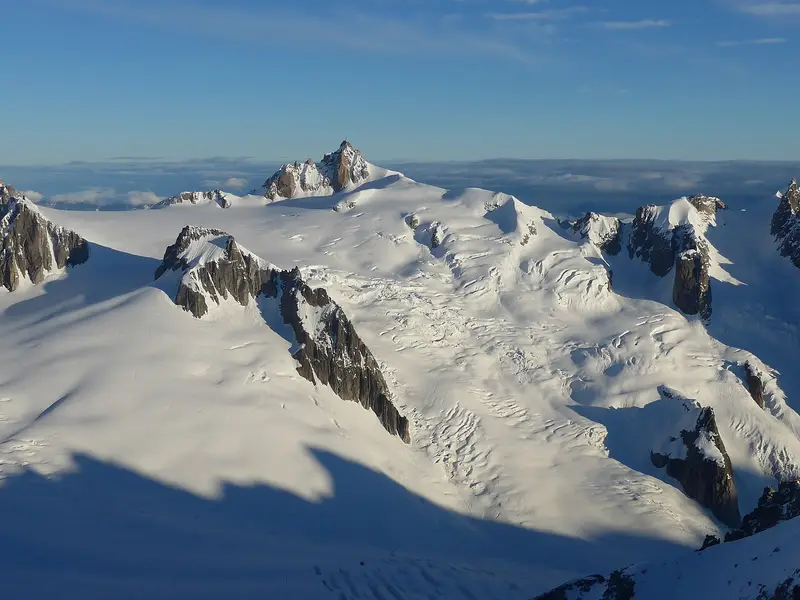
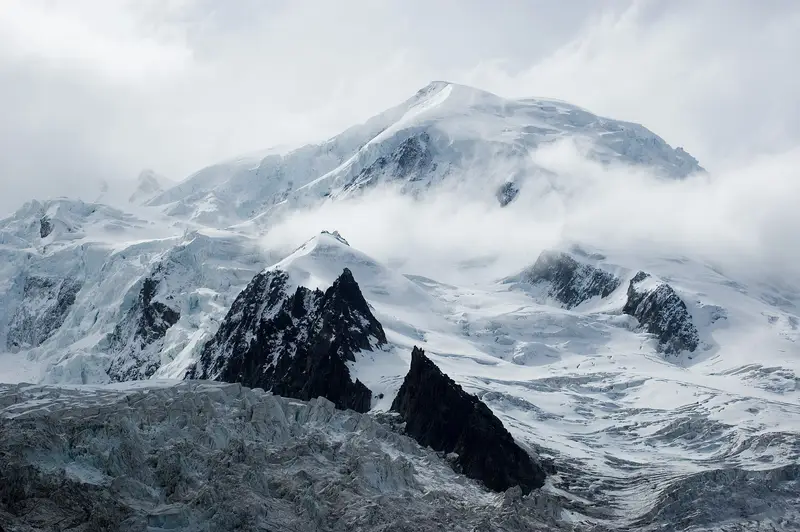
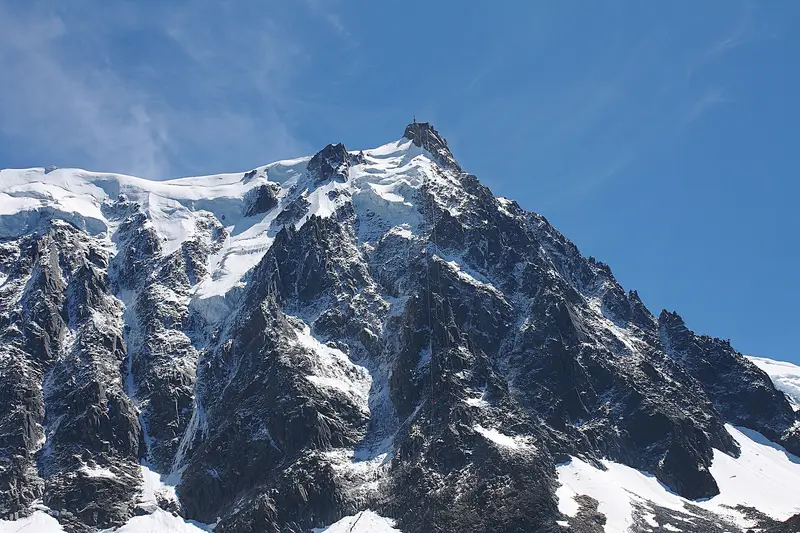
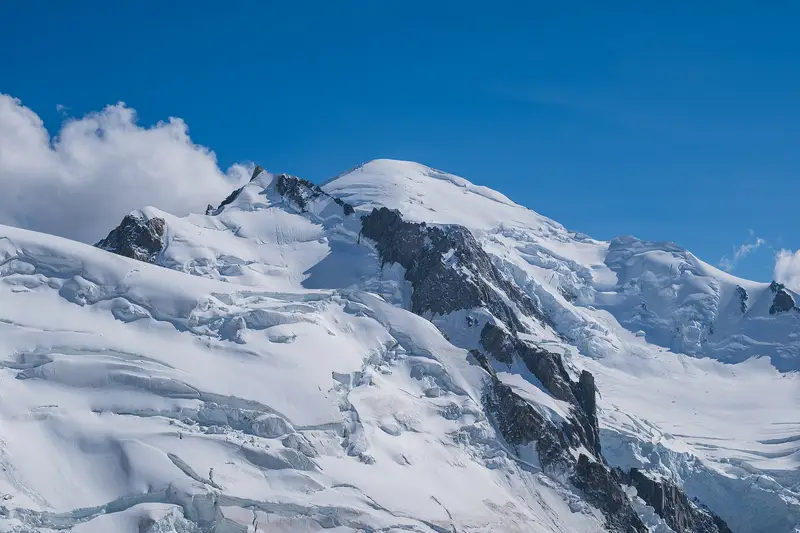
The Aiguille du Midi terraces face the French, Italian and Swiss Alps, with the Mont Blanc massif beside you. Drones are not allowed. Dress for the cold, because the summit can fall to about -10 °C even in summer, and plan 2 to 3 hours for the whole visit.
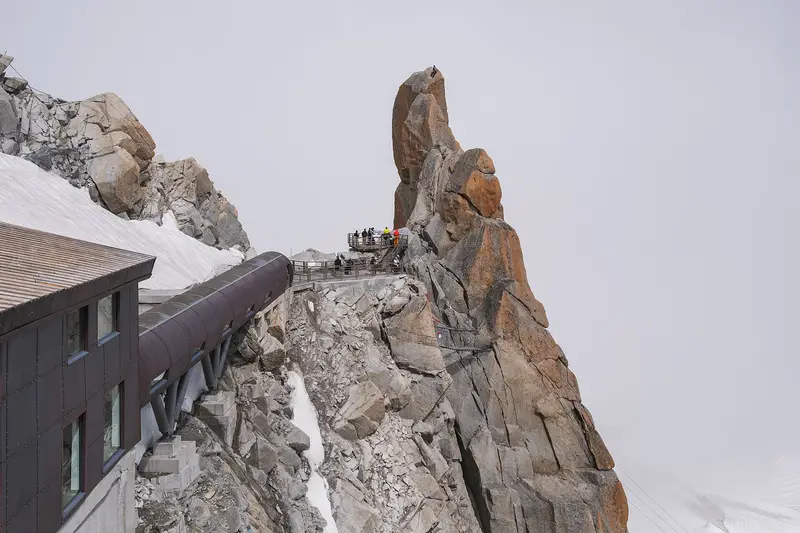
Step into the Void is a glass box hanging over a drop of more than 1,000 m, and access is free once you are up. Le Tube, a 32 m steel gallery around the central peak, and the Espace Vertical windows are close by.
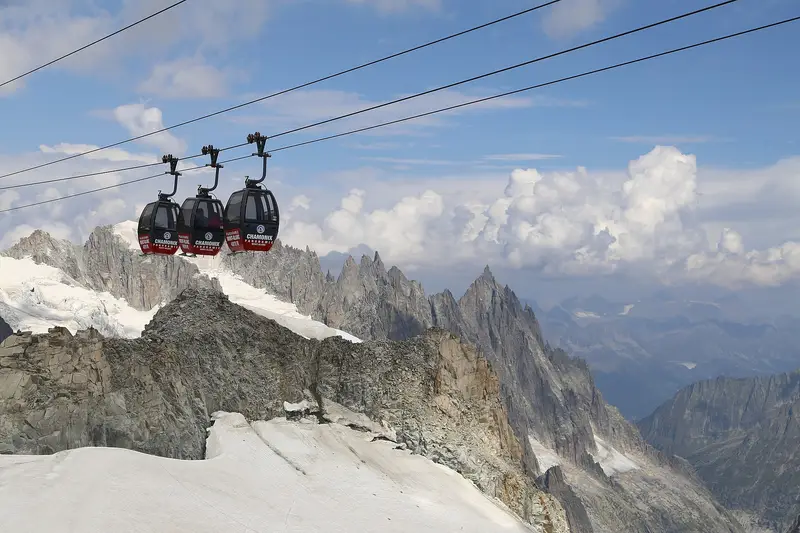
In summer the Panoramic Mont-Blanc gondola runs from the summit to Pointe Helbronner at 3,462 m. The 2026 season ran from 13 July to 27 September. It is closed in winter, and the ticket from the summit is bought at the top only.
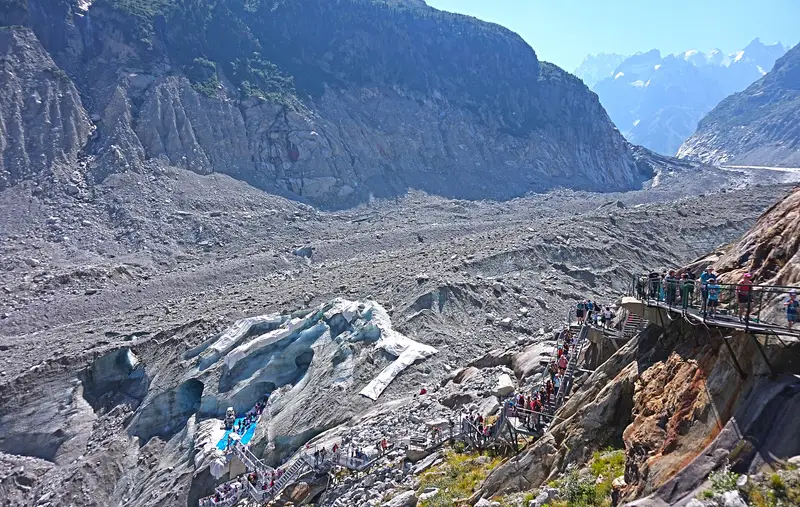
The Montenvers train climbs from Chamonix to the Mer de Glace in about 20 minutes. The ice cave has 170 steps and no wheelchair access. There are no train reservations, and a visit takes 2 to 3 hours. Children under 1 are not allowed, and dogs on a leash are.
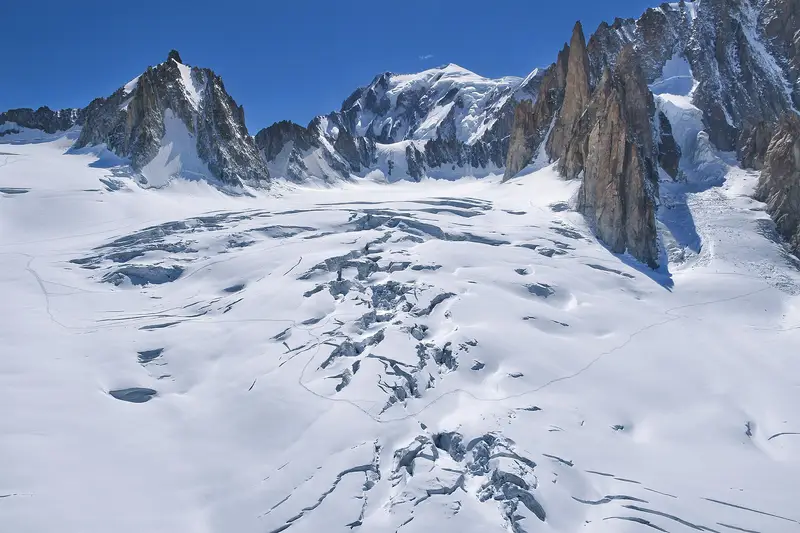
The Vallée Blanche runs about 20 km from the Aiguille du Midi to Chamonix with a descent of 2,700 m. It crosses glaciers including the Mer de Glace. Inexperienced skiers can only go with a guide, and guides take at most 6 clients.
Put the first car and your arrival by train on the same plan.
A bed beside the cable car station saves the morning transfer. A bed near the train station suits a day that starts with a rail arrival. Chamonix centre sits between the two.
Reserve the room first, then book the cable car slot for the morning you want.
Can you visit the Aiguille du Midi right now? Not until the winter reopening. On 21 November 2026 the operator’s live status page showed every lift to the summit closed, with reopening announced for 19 December 2026. After that date the cable car runs from Chamonix to a terrace at 3,842 m, and a ride needs a free reservation for a date and departure time.
Is the cable car open, and when does it reopen?
The Aiguille du Midi cable car is closed. The operator’s live page showed the Chamonix to Plan de l’Aiguille lift, the Plan de l’Aiguille to summit lift and the summit terrace lift all closed on 21 November 2026, with the same line on each: reopening on 19 December. The home page of the operator’s site carried the same banner.
The live page also reports conditions at the top. On the same day it listed -11 °C at the summit, an avalanche risk of 4 out of 5 and 300 cm of snow on the ground, with 100 cm of it fresh. Those are one morning’s readings, not a forecast, but they show how cold and snowy the summit is in winter.
The winter season runs from 19 December 2026 to 28 March 2027, followed by a second period from 29 March to 30 May 2027. The operator also lists a series of summer periods for 2026, ending with 2 November to 18 December 2026, which is the closure you are looking at now. The opening times page has the full timetable and what the periods mean.
If you are planning a trip for the weeks around 19 December, treat the date as an announcement, not a guarantee. The operator gives its times only as a guide, and they shift with the weather and with how the lifts are running. The live page is the one to open on the morning you travel.
What does a ticket cost, and how do you get a slot?
An adult return ticket from Chamonix to the summit costs €60.20 to €83.00. A child aged 5 to 14, or anyone aged 65 or over, pays €51.20 to €70.60. The price moves with the date and the departure time, so the cheaper end belongs to quieter days and the dearer end to busy ones.
Reservation is free and required. You pick a date and a departure time, and a ticket bought online includes that cable car reservation. The operator calls buying in advance “highly recommended”. Pass holders do not buy a ticket, but they still book a slot, and that is free too.
One detail catches people out. The first five morning slots cannot be booked online. They are kept for mountaineers, who have to be there on the day. If you want the earliest car, plan for the first bookable slot after those five, not the first car itself.
Families get a better rate. Two adults (parents or grandparents) travelling with children of the same family pay for the first two children. The third, fourth and fifth children are free, up to that maximum. A visitor with a disability card gets 50% off for the holder and a companion, at the ticket window. The tickets page walks through each option, including the ticket that stops at Plan de l’Aiguille and the one for hikers who walk back down to Plan de l’Aiguille.
What does the day look like?
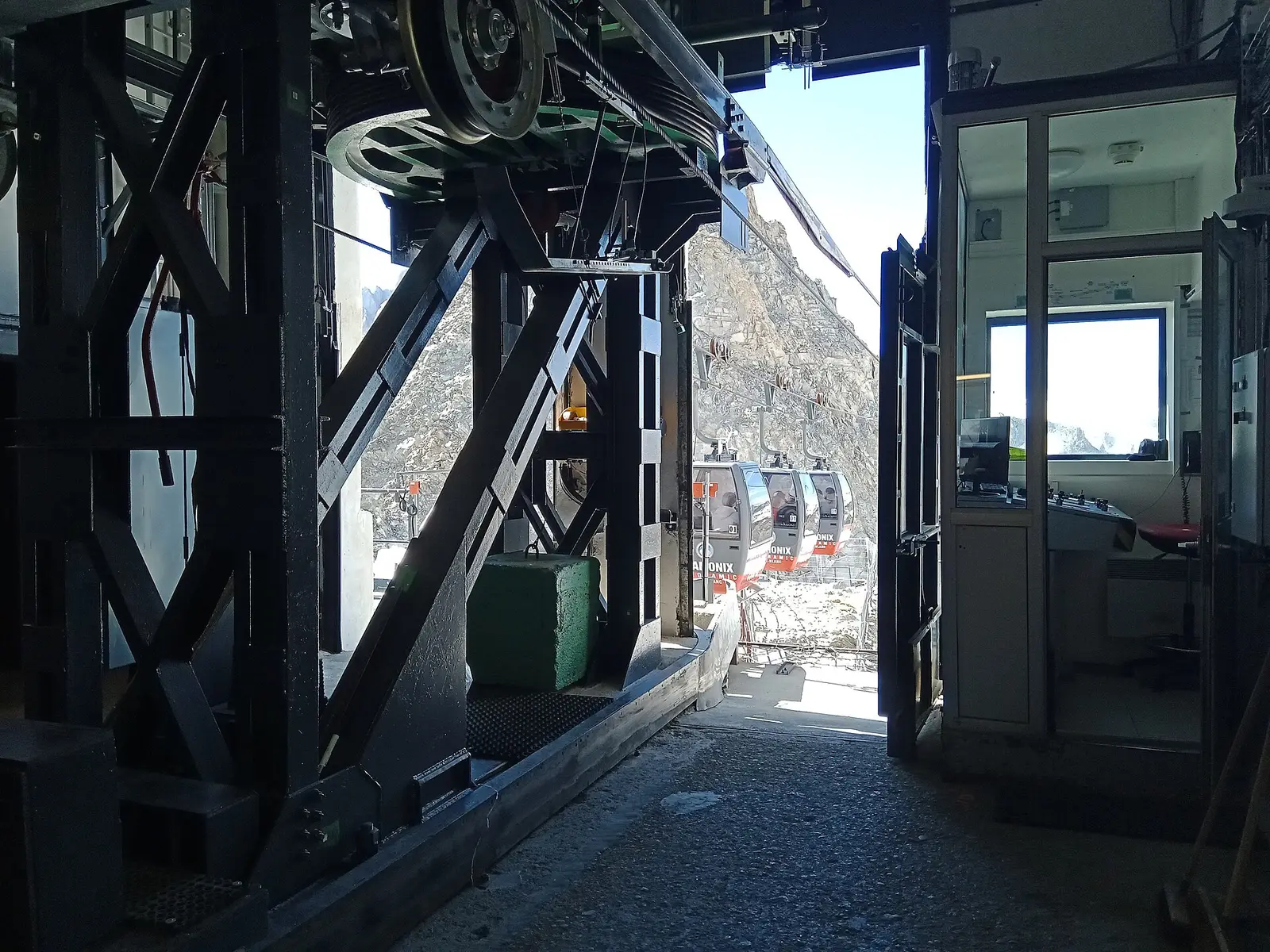
The cable car leaves from a station at 1,035 m in Chamonix. The operator’s address is 100 place de l’Aiguille du Midi, 74400 Chamonix. The ride is in two stages. The first car climbs to Plan de l’Aiguille at 2,317 m, where you change cars. The second climbs to the upper station at 3,777 m, and a lift then takes you up to the terrace at 3,842 m. The second section has a span of 2,867 m, which is a long stretch of cable with nothing under it.
Each cabin holds 65 people, and the ride takes 20 to 40 minutes depending on how busy it is. On the way back you stop at the mid-station. The operator says the average visit lasts 2 to 3 hours including the ride, and that this can double at peak times. So a morning slot with a sensible lunch afterwards is realistic. A morning slot plus a train to Geneva that afternoon is a gamble.
The timetable shows the first car at 08:10, with 07:30 on weekends and holidays. The last return-trip departure from Chamonix is 15:00, the last one-way departure is 16:00, and the last car down leaves the summit at 16:30. Cars run every 10, 15 or 30 minutes depending on traffic.
That 16:30 last descent is the number to remember. Time at the top disappears fast, and nobody wants to be queuing for a car with the cabin closing. Aim to be at the lift well before the last car down, not just before it.
What is there to do at the top?
The terraces sit at 3,842 m and look over the French, Italian and Swiss Alps. Drones are not allowed. The first thing most visitors head for is Step into the Void, a glass box that hangs over a drop of more than 1,000 m. It opened in December 2013, and access to it and to the terrace lift is free once you are up there.
Le Tube is a 32 m steel gallery that runs around the central peak above 3,700 m. It opened in 2016. Espace Vertical has picture windows facing Mont Blanc du Tacul, Mont Maudit and Mont Blanc, and it doubles as a mountaineering museum. The Palier Hypoxie explains what thin air does to the body, which is a useful thing to read before you start to feel it. Espace Histoire covers how the cable car was built and how the machinery works, and there is a 4D cinema too.
Food is at the Cafétéria le Summit 3842 and at Restaurant le 3842, with a Vertical Shop and café at the departure station and at the top. There is no picnic room, so bring a snack to eat outside or buy something up there. Restrooms are at the start, at Plan de l’Aiguille and at the summit. A free luggage check for carry-on-size bags is available at the Chamonix station, which helps if you arrive straight off a train. The app has 17 audio guides.
The at the top page goes through each of these in the order most people meet them, and says which ones need the most time.
Can children go, and what about altitude?
Children under 3 are not allowed. The operator advises against bringing children under 5. For a family with kids aged 5 and over, the family ticket applies and the rate works out well, because the third and later children travel free.
The summit is above 3,800 m, and the air is thin. The operator’s Palier Hypoxie is there to explain the oxygen loss, and the operator does not recommend the trip with a severe cold or with heart problems. There is no contraindication for pregnant women, though the operator says to ask a doctor if in doubt. Animals are not allowed except assistance animals.
Wheelchair users can ride: the limit is two wheelchairs per cable car. The lift to Step into the Void is accessible. The summit restaurant area is not. The children and altitude page covers pacing a family visit in more detail.
What if it is cloudy?
Cloud is the main reason a booked slot turns out badly. The operator’s live page shows summit weather, avalanche risk and whether the lifts are running, and it is the page to open before you leave your accommodation. Times change with weather. A closure can come with little warning, which matters if you booked a fixed tour.
The terraces are cold in any season. Temperatures can fall to about -10 °C even in summer, and the operator says to bring warm clothes, sunglasses and sunblock in every season.
Tour listings treat closures differently from the cable car itself. The listing for the Geneva cable car and train day says there is no refund when the cable car is shut and does not guarantee the ice cave. The glass-roof coach day says activities can close during the day with no refund. Read those terms before paying, especially for a trip around the autumn closure weeks. The bad weather page sets out what to do on the day and which options hold up when the summit does not.
If the weather looks wrong, a day does not have to be wasted. Chamonix has other options, and the Mer de Glace is the usual alternative, covered below.
When is the best time to go?
The honest answer is early, on a day the live page shows clear. An early slot suits a day when the live page shows clear weather, and the operator says the visit can double in length at peak times. There is no need to guess at crowd numbers: the visit time the operator gives is the signal. If it is 2 to 3 hours in a quiet month, expect up to twice that in a busy one.
Winter and summer give different mountains. In winter the terraces are snow-covered and the lifts run only inside the winter season. In summer the Panoramic gondola to Helbronner is also open, which adds a second trip. The best time page compares the seasons and lists the clear-morning approach in full.
The Panoramic Mont-Blanc gondola
From the summit you can carry on across the glaciers. The Panoramic Mont-Blanc gondola runs from the Aiguille du Midi to Pointe Helbronner, at 3,462 m, on the Italian side. It is closed in winter. The 2026 season ran from 13 July to 27 September, with a first return departure at 07:00, a last return at 15:45 and a last one-way departure at 16:30.
The ticket from the summit to Helbronner can only be bought at the summit, with no reservation. Children under 5 are free with proof at the ticket offices. At Helbronner the gondola connects to the Skyway Monte Bianco, which opened in 2015 and runs down to Entrèves near Courmayeur in Italy. It links the Aiguille du Midi to Courmayeur in summer. The Panoramic gondola page covers the details.
Aiguille du Midi or Mer de Glace?
Many visitors choose one of the two, and the choice is real. The Aiguille du Midi gives you altitude, with views of the highest summits and a ride through the thinnest air you will reach without climbing. The Mer de Glace gives you a glacier at close range, reached by a train that opened in 1909 and climbs from Chamonix at 1,035 m to Montenvers at 1,913 m in about 20 minutes. The station is next to the Chamonix train station.
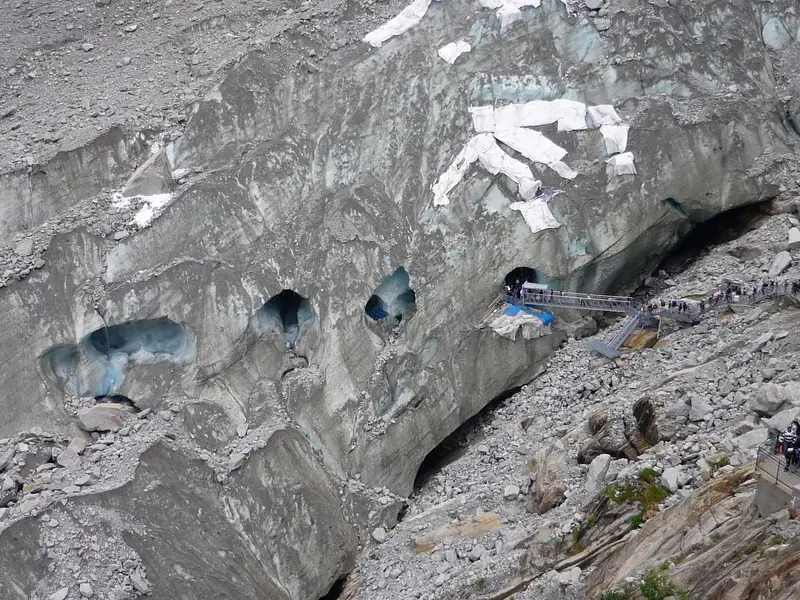
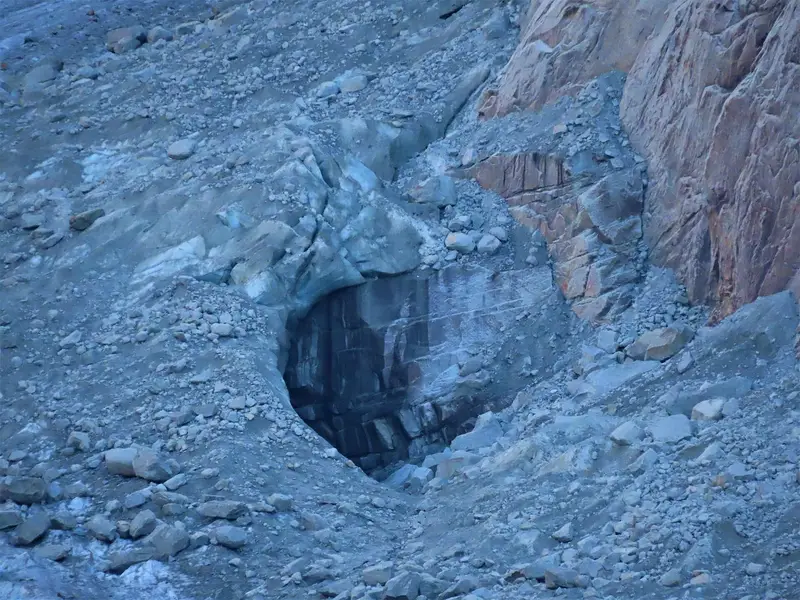
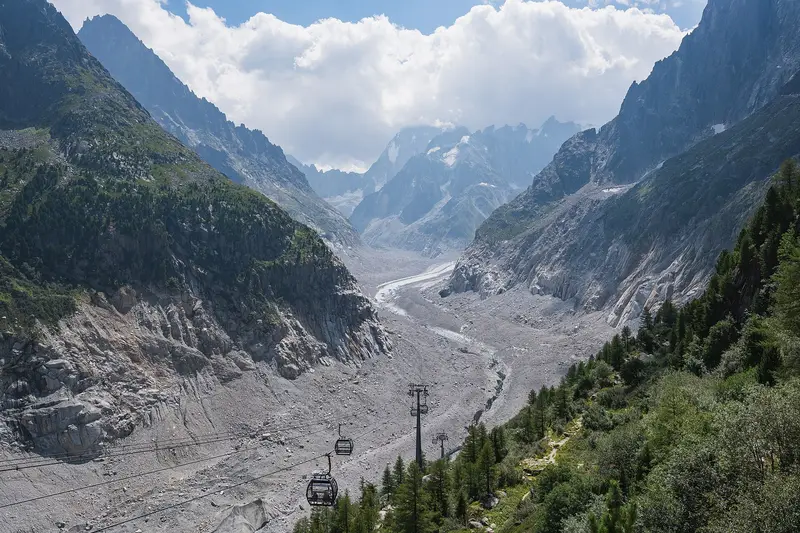
The Mer de Glace is about 7.5 km long and 200 m deep. Counted with its tributary glaciers, it can be seen as the longest glacier in France, and it has thinned markedly since the middle of the 20th century. The ice cave involves 170 steps and has no wheelchair access. Unlike the cable car, the train needs no reservation, and a return ticket is valid for up to 7 days after the ascent. A visit takes 2 to 3 hours.
An Aiguille du Midi ticket does not include the Mer de Glace gondola or the Montenvers train. The MONT BLANC Unlimited pass covers both, along with the Tramway du Mont-Blanc and several ski areas. It needs a booking only for the Aiguille du Midi and the Tramway du Mont-Blanc. For someone who wants both lifts in one day, the pass is worth pricing against two separate tickets.
Winter 2026 changes the choice. The Montenvers train is closed for works from 2 November to 4 December 2026, and the gondola and ice cave open on 19 December. The comparison page lays out the two side by side.
The Vallée Blanche
The Vallée Blanche is an off-piste ski route from the Aiguille du Midi down to Chamonix. It is about 20 km long with a descent of 2,700 m, and it crosses glaciers including the Mer de Glace. The operator says inexperienced skiers can only do it with a guide. Guides take a maximum of 6 clients, and guide bookings are made at the ticket offices 48 hours ahead. A guided descent costs from $197 on the tour listing. The ski descent is a separate day from sightseeing, with its own gear and its own risks.
Is it worth doing from Geneva in a day?
Geneva Airport is about 70 km from the cable car station as the crow flies, so a day trip is realistic. The coach drive is about 90 minutes each way on the listing that includes the cable car and the Montenvers train. The question is whether to buy a coach tour with the lifts built in, or to book your own Aiguille du Midi slot and get to Chamonix on your own.
A coach tour solves the transport and often the timing. A glass-roof coach day starts from $105, a guided day with hotel pickup and a 30-minute guided summit visit starts from $117, and the day with the cable car and train both included starts from $242. The cheapest options do not always include the lifts, so read what the price covers before choosing. Going alone means more freedom, and it also means you carry the risk of a booked slot that the weather cancels.
The Geneva day trip page compares the coach tours against doing it yourself, and you can compare tours from Geneva and Chamonix side by side.
Getting to the station and where to stay
The cable car station is in the middle of Chamonix. The nearest car park is Grépon, which is paid. Two buses stop nearby: the downtown shuttle Le Mulet, at the Jean Franco stop, and the SKI 14. The pass gives free access to Chamonix buses. The Chamonix-Mont-Blanc train station is about 600 m north of the cable car station as the crow flies, so a visitor arriving by rail can reach the lift on foot.
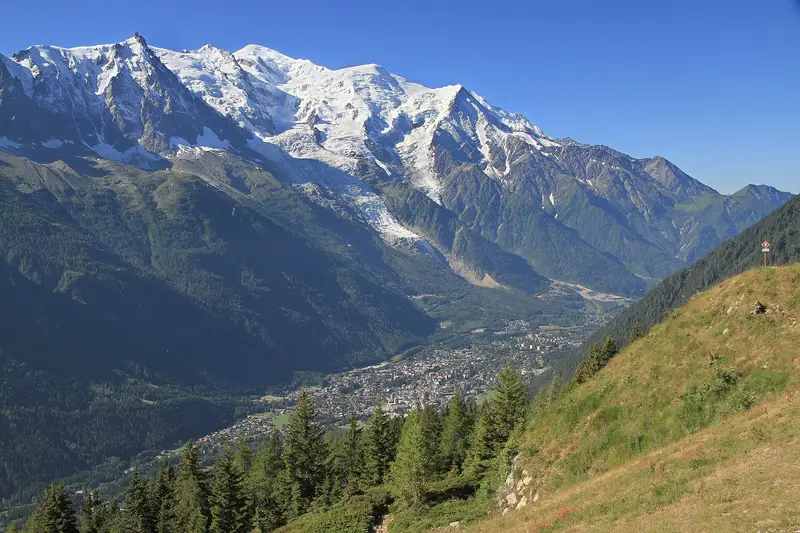
Chamonix sits between the Aiguilles Rouges and the Mont Blanc massif, and it hosted the first Winter Olympics in 1924. It borders both Switzerland and Italy, which is why it works as a base for the whole range. An early first car is much easier from a bed near the station. A bed beside the cable car station saves a morning transfer, and a bed near the train station suits an arrival by rail. The where to stay page compares the areas.
Which slot should you pick?
Start from the last car down, not the first car up. The last car leaves the summit at 16:30, and the last return-trip departure from Chamonix is 15:00. A visit of 2 to 3 hours, which can double at peak times, fits comfortably into a morning departure. A slot just before 15:00 leaves little room for a ride that can take 40 minutes each way and a queue at the top.
A morning slot also leaves the afternoon free. You can eat in Chamonix, walk the town, or take the Montenvers train if the Mer de Glace is open. A visitor on a tight schedule, such as one arriving from Geneva by coach, has less choice. The tour sets the slot, and the live page on the day decides whether it happens.
Buying in advance online is the safer route, and the free reservation is part of the ticket. Visitors with a pass book a slot in the same way, so the pass does not remove the need to plan the hour.
What to bring
Bring warm clothes, sunglasses and sunblock in every season, as the operator advises. Keep a snack and water in a small bag, because there is no picnic room. A carry-on-size bag can go in the free luggage check at the Chamonix station, so you do not need to carry a suitcase up a mountain.
Cash, cheques with ID, CB, Visa and MasterCard and holiday vouchers are all accepted at the ticket offices, and cash is accepted up to €1,000. Buying online avoids the window altogether.
A short plan
For a first visit, pick the date first, then the time. Look at the live page for the reopening date, book a free slot with your ticket, and choose a morning departure. Bring warm layers even in summer, and leave 2 to 3 hours for the visit plus the ride. If the summit is out of reach that day, take the train to Montenvers instead and try again.
If you would rather not manage the pieces, a guided option takes the ticket, the timing and the transport off your list. A private guide in Chamonix starts from $176 for about 3.5 hours, with the cable car tickets bought separately and the listing not suitable for children under 10. The other two picks above come from Geneva.
Guided days from Geneva and Chamonix
Choose a tour
Compare a guided day, a coach day with the lifts included and a private guide.
On 21 November 2026 the operator's live page showed the lifts closed, with reopening announced for 19 December 2026. The Panoramic gondola to Helbronner is closed in winter.
Do you need to book the Aiguille du Midi cable car?
Yes. Reservation is free and required, with a date and departure time. A ticket bought online includes it, and pass holders book a slot. The first 5 morning slots cannot be booked online.
How much does the Aiguille du Midi cost?
An adult return from Chamonix to the summit is €60.20 to €83.00, depending on date and time. A child aged 5 to 14, or anyone 65 or over, pays €51.20 to €70.60.
How long should you plan for the visit?
The operator gives an average of 2 to 3 hours including the ride, which can double at peak times. The ride itself takes 20 to 40 minutes depending on attendance.
Can you visit from Geneva in one day?
Yes. Geneva Airport is about 70 km from the cable car station as the crow flies. Coach tours run from $105, and the day with the cable car and train included runs from $242.
Booking through this button may earn us commission without increasing your price.